Water-Jetting Foundation Piers: How Above All Does It Differently
Most foundation repair companies take a one-size-fits-all approach to pier installation. At Above All Foundation Repair, we use water-jetting when the soil calls for it, and we do it with precision that protects your home's long-term stability.
 Licensed & insured
 BBB A rating
 Written warrantyFree inspectionsLicensed & insuredBBB A ratingWritten warrantyFree inspections
How Water-Jetting Works in Foundation Repair
Water-jetting (also called "jetting piles" or "water-driven pier installation") is a method of driving steel piers deeper into the ground by using high-pressure water to loosen soil ahead of the pier. It's especially effective in the clay and sandy soils common throughout the San Antonio and Austin areas, but only when it's done right.
Positioning the Pier
A steel pier or pipe pile is placed at the repair location. In some cases, a small pilot hole is started to guide placement.
Introducing the Water Jet
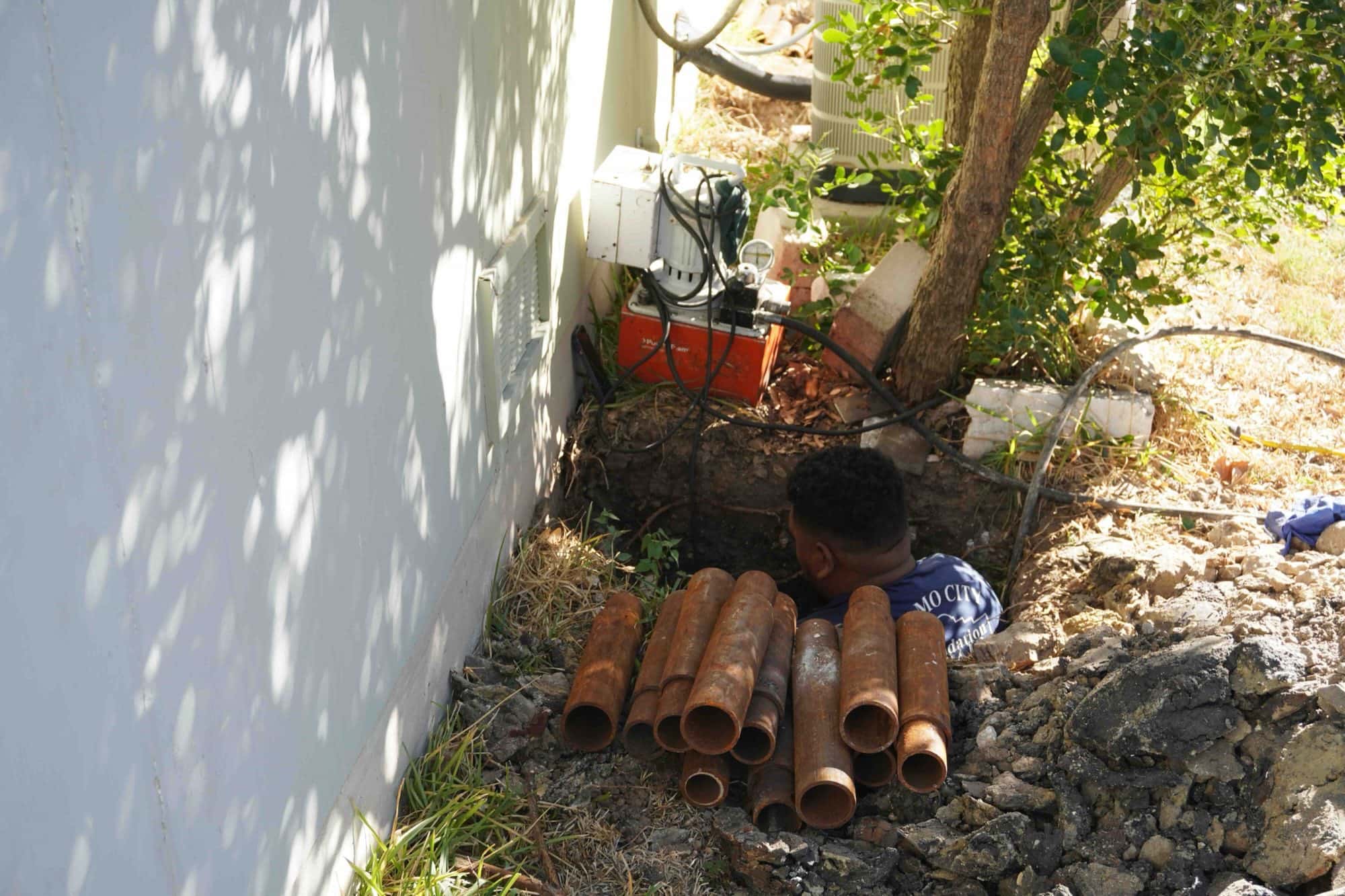
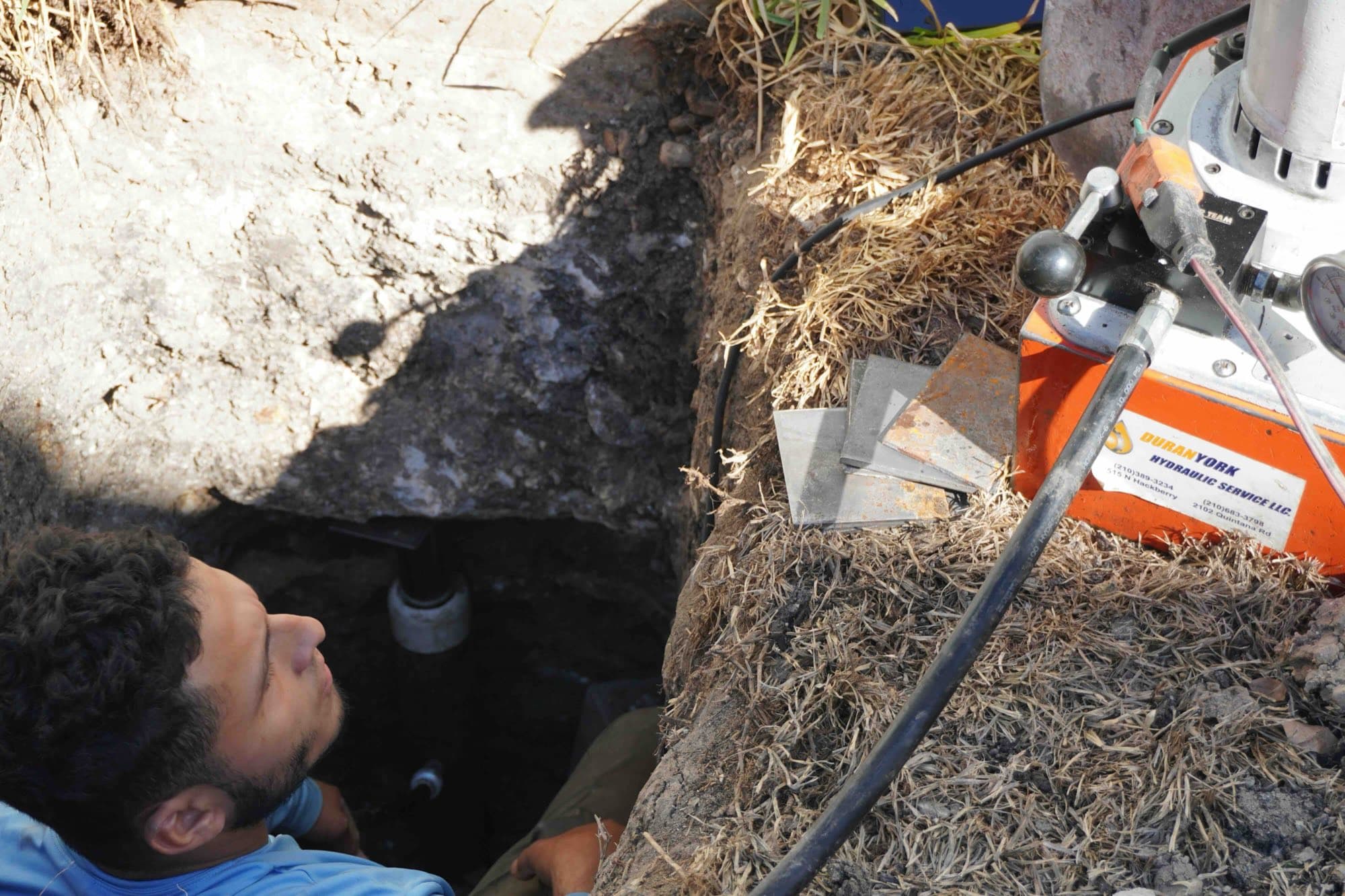
A high-pressure hose is run down alongside or through the pier and connected to a pump. When activated, it delivers pressurized water, typically 2,000 to 4,000+ PSI, directly into the soil ahead of the pier tip.
Loosening the Soil
The pressurized water breaks up compacted clay, displaces sand, and reduces friction along the pier's shaft. This allows the pier to advance deeper with significantly less resistance than mechanical driving alone.
Driving the Pier to Depth
While jetting is active, our crew uses hydraulic pressure or the structure's own weight to push the pier downward. The pier continues advancing until it reaches load-bearing strata or hits refusal: the point at which the soil will not allow further penetration.
Shutting Off and Letting Soil Reconsolidate
Once the target depth is reached, jetting stops. The soil is allowed to settle back and tighten around the pier shaft, a critical step that restores the soil's bearing capacity and locks the pier in place. Skipping or rushing this step is one of the most common mistakes contractors make.
Why Most Contractors Get This Wrong
Water-jetting is a powerful technique, but it's easy to misuse. Here's where other companies cut corners, and what we do differently:
Over-jetting destroys soil capacity
Too much water pressure for too long can permanently loosen the soil around a pier, reducing its load-bearing ability. We monitor pressure and duration carefully to avoid this.
Undermining adjacent piers
Poorly controlled jetting can erode soil beneath nearby piers, creating uneven support across the foundation. We account for existing pier locations before jetting begins.
Expansive clay requires extra caution
South Texas soils are heavily clay-based, meaning they swell with moisture and shrink as they dry. Introducing excess water into these soils can trigger future movement if not managed correctly.
Water under a slab creates voids
When jetting is performed beneath grade beams or concrete slabs without proper controls, water can migrate and erode supporting soils, creating voids that cause new settling problems. Our crews use controlled water volumes and monitor for migration throughout the process.
When We Use Water-Jetting
When our team does use water-jetting, we document pier depth, resistance readings, and reconsolidation time, both to ensure quality and to protect our clients with a documented installation record.
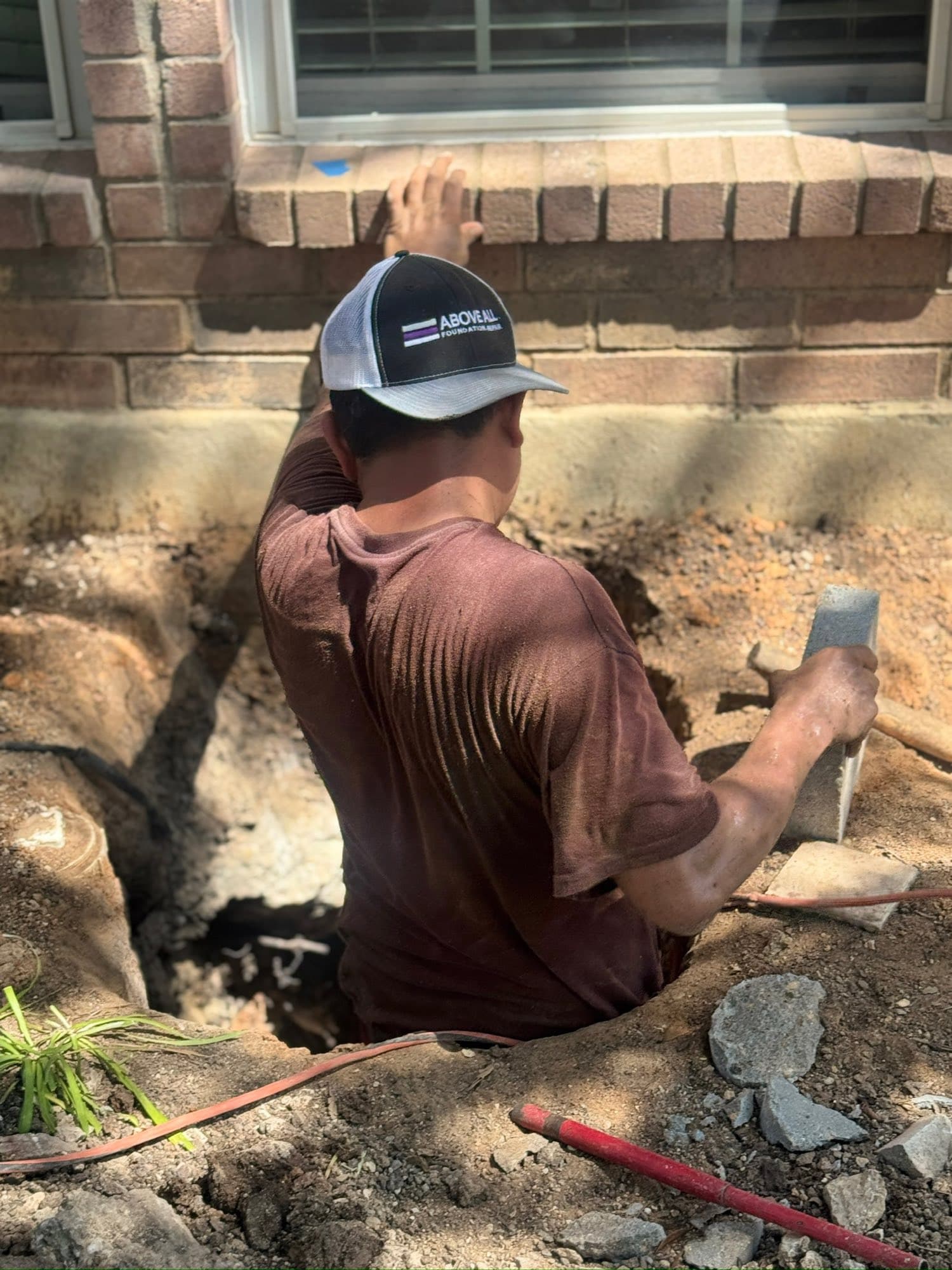
Water-jetting is most appropriate for
- Installations where soil density is too high for mechanical driving alone
- Steel pier projects requiring deeper penetration to reach stable load-bearing strata
- Situations where hydraulic pressing alone would be insufficient or risk damaging the structure
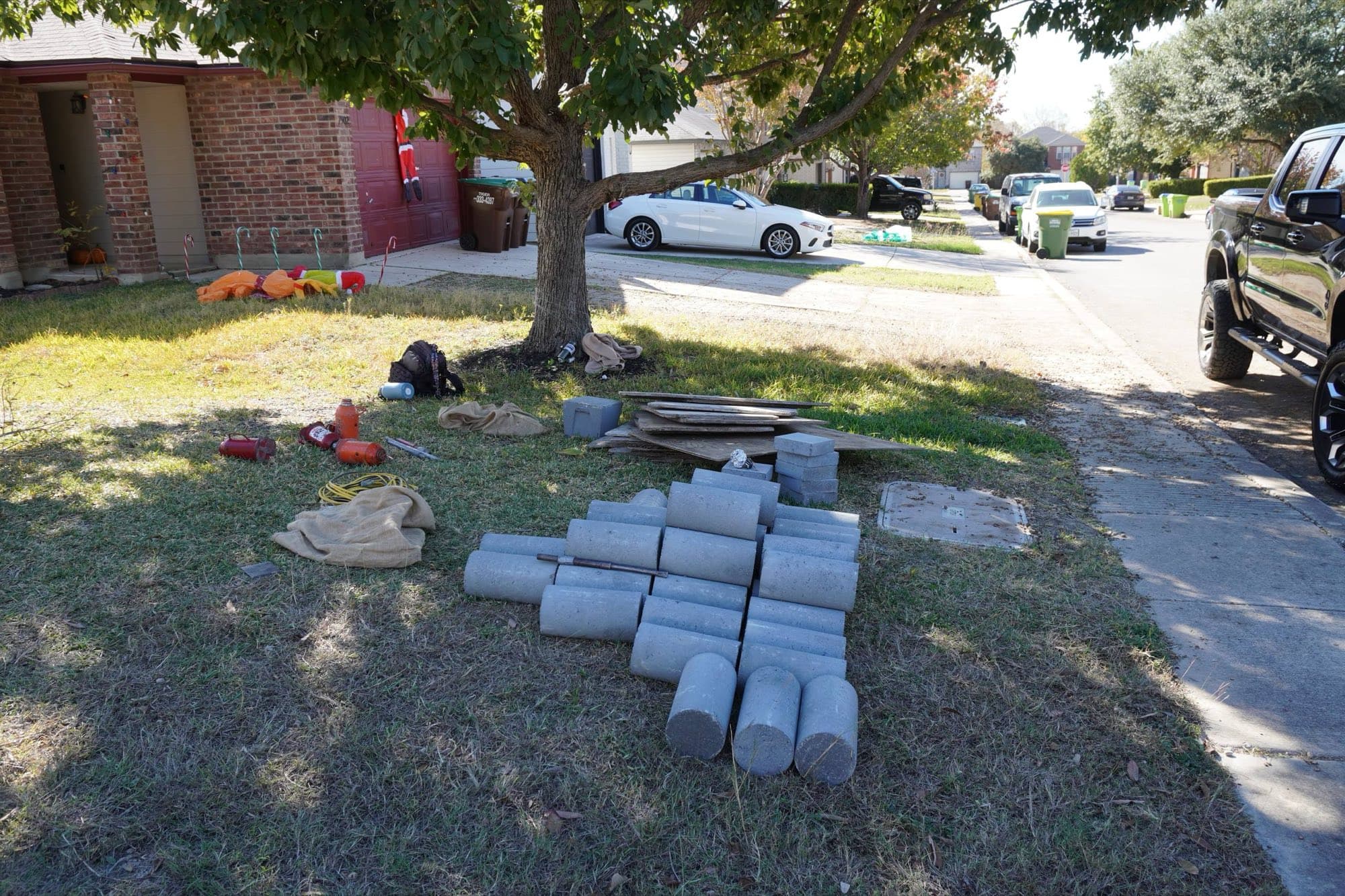
It is generally not used for
- Concrete pressed piling installations (the most common method for standard residential repairs in San Antonio)
- Projects with engineering specifications that explicitly prohibit the jetting method
Ready to Get a Professional Assessment?
If you're dealing with foundation issues in the San Antonio or Austin area, Above All Foundation Repair has over 40 years of experience with the soil conditions specific to Central and South Texas. We'll tell you exactly what method is right for your home, and why.
Estimates are free, written, and specific to your home.
Our Approach: Precision Over Shortcuts
Most engineers specify dry-driven or hydraulically pressed piers for residential foundation repair because the load capacity is more predictable. When we use water-jetting, it's as a precision assist, not a shortcut to skip through difficult soil.
The difference between a water-jetting job done well and one done poorly isn't visible from the surface. It shows up years later when a foundation either holds steady or begins to move again. That's why we take it seriously.